October 09, 2026


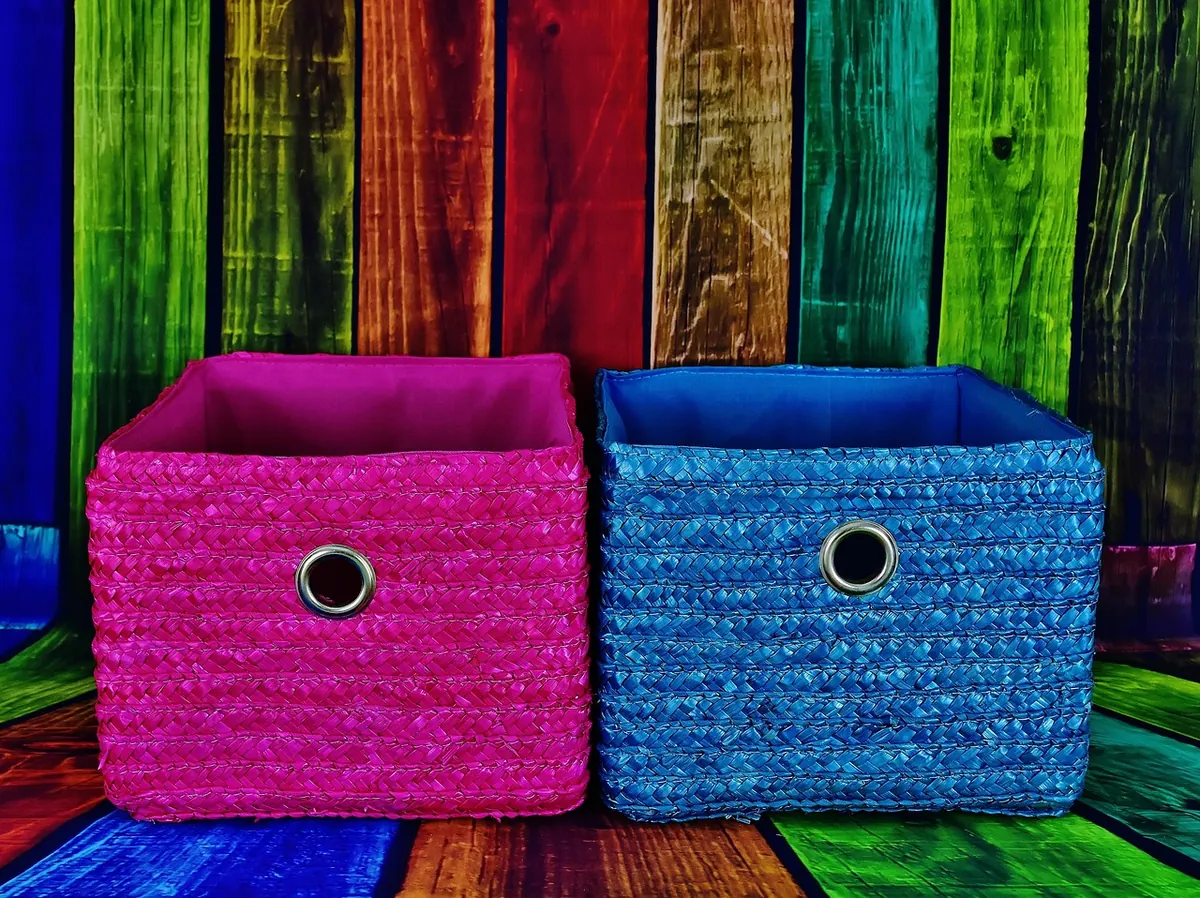
Sorting out family clutter usually starts with a bin bag of things that have no home. Then comes the part nobody warns you about: deciding what to put them in. Storage baskets and clear plastic boxes sit on opposite ends of the same shelf, and each solves a different problem. The right answer has less to do with how they look than with how your household actually behaves on a wet Tuesday afternoon when everyone is hunting for one glove.
Before you buy anything, pick the contents up and handle them for a minute. Two questions decide most of it: does this need protecting from dust, damp or knocks, and does anyone need to find one particular item without emptying the whole container?
Mixed categories are the enemy of both options. A clear box packed with six unrelated things looks like a jumble through the plastic, and a deep basket of assorted clutter is where missing items go to live quietly for years.
Clear boxes earn their place when quantity matters. You can see at a glance whether you are down to your last pack of batteries, or whether the craft box still has glue in it. That is genuinely useful for consumables and for anything a child needs to find on their own.
The trade-off is visual noise. A run of see-through boxes filled with cables, odd socks and half-finished projects looks more chaotic than a row of opaque baskets, even when the contents are identical. Clear plastic also scratches and clouds over time, so the visibility you paid for fades after a few years in a busy cupboard.
Baskets hide things, and that is often the point. In a living room, nobody needs to see forty small plastic animals. But hidden also means forgotten. A useful habit: if nobody has opened a basket for a whole season, tip it out on the floor and re-sort it. Most of it will belong somewhere else, and some of it will leave the house.
Clear boxes are not all equal. The cheap brittle ones crack at the corners and the lid clips snap off the first time someone overfills them. Look for boxes where the plastic flexes rather than shatters, with reinforced corners and lids that clip on all four sides rather than relying on a thin hinge.
Weight matters too. Stacked boxes carry load through the base, not the lid, so heavy items belong at the bottom. Thin boxes are fine for bedding and decorations; they are a poor choice for tools, tinned food or anything that will be dragged across a concrete floor.
Baskets have their own weaknesses. Fabric ones slump when empty and soak up damp in a garage or shed. Wicker snags soft items and dislikes moisture. Woven plastic, coated wire and sturdy felt hold their shape better and wipe clean, which makes them the safer bet for porches and utility rooms. If you are storing anything in a loft, garage or outbuilding, use lidded plastic with a decent seal, and check it once a season. If condensation is forming inside sealed boxes, that is a ventilation problem in the building rather than a fault with the container, and it is worth having someone look at it.
Neither option works without labels. A shelf of matching baskets with no labels is just clutter with a lid on it.
Baskets take luggage tags, chalk labels or fabric tags tied to a handle. Clear boxes take a marker directly on the plastic, which rubs off with a little white spirit when you change your mind. Avoid cheap masking tape in cold lofts and garages; it peels within a winter.
Material matters far less here than height and weight. A five-year-old cannot lift a full box of picture books, so they will drag it instead. Put heavy containers low, on the floor or the bottom shelf, where dragging is safe. Baskets win on softness: no sharp corners, forgiving when dropped, and easy for a small child to tip out and refill. Shallow open-front bins and trays work best for toys used every day.
Lidded boxes suit rotation rather than daily use. The toys that come out every few weeks can live in a lidded box on a higher shelf, safe from dust. Expect the lids to come off and not go back on; it helps to keep one lid with each box and do a quick check when you next tidy. If a child is climbing on a box to reach something, the problem is where the box is stored, not what it is made of. Keep stacked boxes away from anything a child might use as a step, and never balance loose containers on top of a wardrobe beside a bed.
Most households end up using both, and that is the sensible answer. Under the stairs, for example: clear lidded boxes on the top shelf for decorations and spare bulbs, where an adult looks twice a year, and open baskets at grabbing height for shoes, gloves and the dog lead. In a playroom, open baskets for everyday toys and one clear box per set, so the train track stays together and you can see whether it is all there before you tip it out.
The rule of thumb is short. If you need to know what is inside before you open it, choose clear. If you simply need it off the floor and out of sight, choose a basket.
Buy a couple at a time rather than a matching set of twenty, and use what you already own first. Shoe boxes, old baskets and empty jars can do a surprising amount of work before you spend anything. The container is not the system: the system is knowing what lives where and being able to put your hand on it. Get that right, and either option will hold up.
Photo: Alexas_Fotos / Pixabay
Organize your home with simple notes and reminders..
Copyright © 2026 Memo House. All rights reserved. Memo House.