October 09, 2026



A hallway with no cupboard is like a kitchen with no worktop. Everything still has to happen there — shoes come off, coats go on, keys get dropped, the dog lead comes in wet — but there is nowhere for any of it to land. Within a week the floor is a heap of trainers, the radiator is wearing three tote bags, and you are stepping over a buggy to reach the front door.
A cupboard is only one answer. Slim furniture, a well-placed rail and a few honest baskets can do the same job in a fraction of the depth, often for far less than fitted joinery. The trick is to plan the hall around the way you actually come and go, rather than the way you wish you did.
Before you buy anything, spend seven days noticing what really happens in the space. Where do shoes end up? Who drops a coat on the nearest hook, and who leaves a bag on the stairs? Which items leave the house every morning — keys, passes, lunch bags, the dog lead — and which only appear in the colder months?
Then measure three things: the width at the narrowest point, the depth from the wall to the swing of the front door, and the height of anything you must not block, such as a radiator or a light switch. These numbers decide what you can buy.
Most hallways have more usable space than their owners think. A shallow shoe cabinet is typically only 20–30cm deep, and a wall-hung unit keeps the floor visible underneath. That single change can be the difference between a hall that feels like a tunnel and one that simply works.
Depth is the enemy in a hallway. Choose storage that is shallow but tall: a narrow shoe cabinet, a slim tower unit, or a column of open shelves no deeper than a pair of boots. If you can, hang it on the wall. Seeing floor beneath a unit makes a tight space feel considerably wider, and it makes sweeping much easier.
The backs of doors are wasted in most homes. An over-door organiser with pockets will hold gloves, hats, scarves and leads without taking up a centimetre of floor. The door to the living room or the under-stairs cupboard is a good candidate — just check it still closes properly and that nothing hangs low enough to catch.
Ends of corridors, the gap beside the front door and any nook under the stairs are all worth measuring. Even 60cm of width can take a narrow bench with a lift-up lid, which gives you a seat and a hiding place for shoes in one piece.
Whatever you choose, keep the walking route clear. If two people cannot pass each other comfortably, the storage is too deep.
A coat rail costs very little and holds far more than people expect, which makes it the first thing to install when there is no cupboard. Buy a rail with proper hooks rather than small pegs — coats, bags and umbrellas all hang better on a curved hook.
Fix it securely. Into a stud or a solid wall, ordinary screws are fine; into plasterboard, use proper hollow-wall fixings rated for the weight, because a rail full of wet winter coats is heavy. Allow one hook per person, plus two spares for guests and the bag that always seems to appear.
Heights matter more than most people realise. Adult hooks usually sit somewhere around shoulder height to just above head height, and children manage far better with a second rail at their own level — low enough that they can reach it without a stool. Put a small shelf above the rail for hats and a basket on it for gloves, and the whole coat-and-shoe routine happens in one spot.
Keep hooks away from the door swing and from the top of the stairs. It sounds obvious until you have a wet coat catching on a door handle every morning.
If you have roughly 40cm of depth to play with, a bench is the best single addition you can make. It gives you somewhere to sit while pulling on wellies, and it creates a sheltered space underneath for two or three baskets or a row of shoes.
A few things to look for:
No room for a bench? A folding stool or a small bench that tucks under a shelf will do the same job and can be put away when the hall is at its busiest.
The floor clutter in a hallway is rarely coats. It is keys, post, receipts, hair bobbles, spare change, a football, three odd gloves. None of it takes much room, but all of it takes organisation.
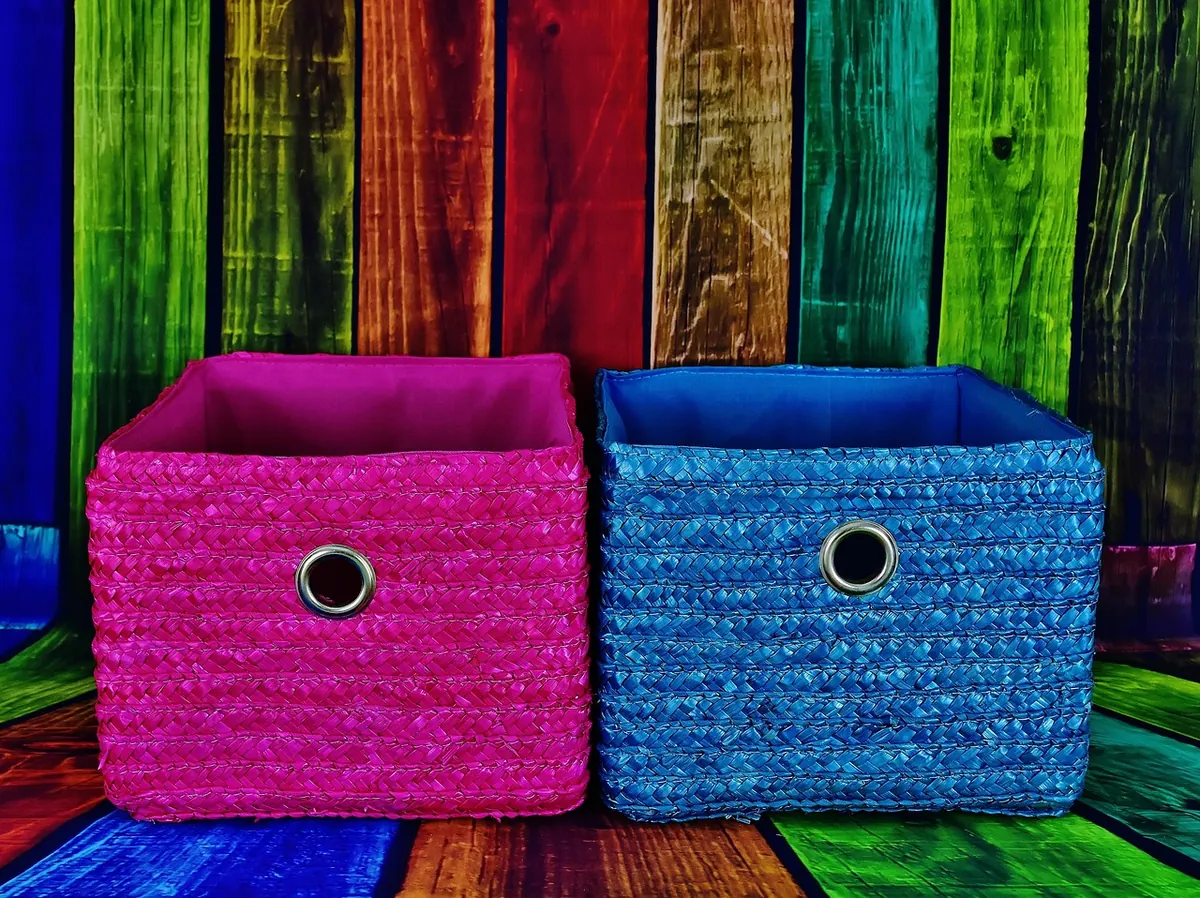
Give each category a container and keep the containers open and reachable. Closed boxes look tidier but get ignored, and things end up on the floor beside them. A shallow tray on a shelf by the door handles keys and change. A letter rack or a lidded box deals with post — empty it once a week rather than letting it become a permanent feature. One basket per person, in a different colour or with a name on the front, stops the "that's not mine" argument.
Radiators are not shelving. Do not stack storage on top of them or press furniture right against the front, or you lose much of the heat you are paying for.
Any system in a hallway will fail eventually, usually on a wet Tuesday. What keeps it going is making the reset small enough that it actually happens.
Try a sixty-second clear-up before bed: shoes into the basket, coats on hooks, keys in the tray, nothing left on the floor. Once a season, swap the contents over — wellies and heavy coats out in autumn, sun hats and light jackets in spring. Follow a one-in-one-out rule for shoes so the collection cannot quietly grow past the storage you have.
And agree on one firm rule: the hallway is not a dumping ground. Anything that lives in another room goes to that room, even if it means carrying it upstairs. Low hooks for children and open baskets for shoes mean everyone in the house can put their own things away, which is the only version of this that survives contact with a real family.
If you want to start this weekend, work through it in order:
You will not miss the cupboard. What you will notice is that leaving the house in the morning takes less time, and that you can open the front door without pushing a pile of shoes out of the way first.
Photo: analogicus / Pixabay
Organize your home with simple notes and reminders..
Copyright © 2026 Memo House. All rights reserved. Memo House.